Overview
Etsy Interested Shopper Offer
Expanding targeted offers to reach buyers earlier in their shopping journey.
5.1%
Seller adoption rate
0.29%
Redemption rate
3.36%
Conversion rate
- Role
- Design Lead
- Company
- Etsy
- Year
- 2026
- Scope
- Seller + buyer experience
- Status
- Shipped
I led the design of the MVP across the seller setup experience and initial buyer-facing touchpoints, partnering across Product, Engineering, Analytics, Content, and Product Marketing from definition through launch and adoption.
Etsy’s existing targeted offers reached buyers after explicit signals of intent, such as favoriting an item or leaving something in their cart. That left an opportunity to reach interested shoppers earlier, while they were still considering what to buy.
The challenge
Introducing another offer was not automatically the right answer.
Context
I had already worked inside Etsy’s promotions ecosystem, and I questioned whether another promotion type would create more value than continuing to improve the ones sellers already had.
Evidence about how few buyer visits could trigger existing targeted offers changed how I saw the problem. Those offers depended on explicit actions. Most shopping happens before a favorite or an abandoned cart. The gap was a stage of buyer consideration the current system could not reach.
The problem
How do we introduce and validate a new offer quickly without adding unnecessary complexity to an already mature promotions system?
01
Reaching intent earlier
Existing targeted offers depended on explicit buyer actions, which meant sellers could only reach shoppers after relatively strong signals of intent. Browse behavior created an opportunity to engage interested shoppers earlier in their consideration journey.
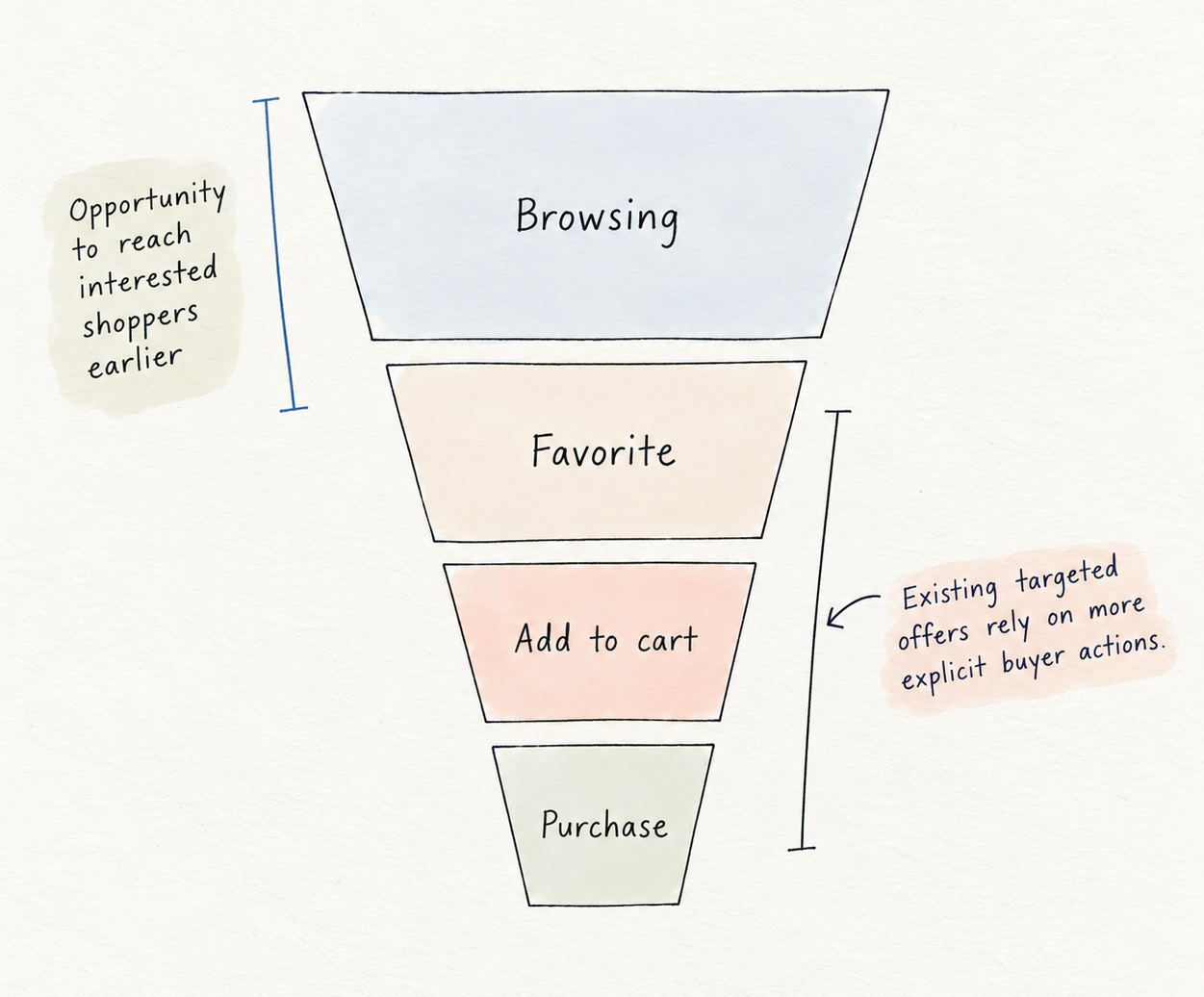
Earlier signals also carry more ambiguity. These buyers may be interested, but they do not necessarily have the same purchase intent as someone who has favorited an item or left something in their cart.
02
Adding to a system already at its limits
The existing targeted-offer setup gave us a path to launch quickly, but it was already carrying significant design debt. Adding another offer risked making an increasingly complex experience harder for sellers to understand and manage.
At the same time, Etsy’s Design Systems organization was evolving the foundations for a broader modernization of seller experiences. We needed to keep delivering and learning within today’s experience without over-investing in patterns we knew would eventually change.
03
Explaining a product designed to evolve
The targeting approach was expected to evolve after launch, which created a content challenge: sellers needed enough information to understand why the offer was useful without tying the experience to implementation details that could quickly become outdated.
I worked closely with my Content Design partner to communicate the buyer opportunity rather than over-explain the underlying targeting mechanics.
Key decisions
01
Use the existing setup to learn faster
Would sellers see enough value in this new offer to adopt it?
I explored several ways to introduce the new offer, including approaches that would have required more significant changes to the existing targeted-offer experience.
For the MVP, I chose to integrate it into the existing setup. It was the lowest-cost path and, more importantly, the fastest way to answer the question we needed to answer first.
This was a deliberate trade-off. The existing experience already carried significant design debt, and adding another offer pushed it closer to the limits of what the current structure could support. But redesigning the system before validating the new concept would have increased the investment before we knew whether sellers wanted it.
The MVP prioritized learning while avoiding decisions that would prevent the experience from evolving later.
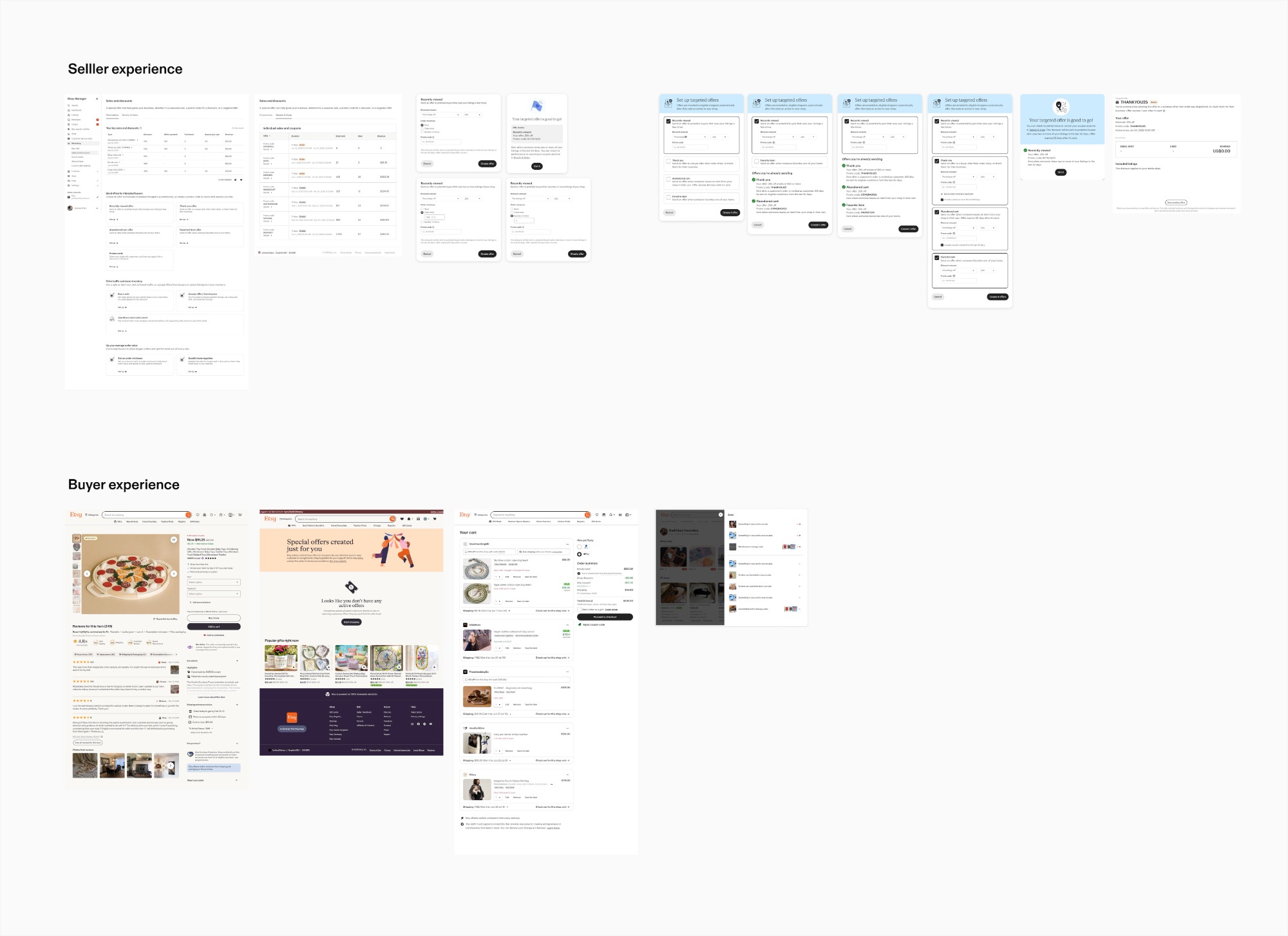
Exploring how much of the existing experience to change. I considered several ways to introduce the offer across the seller and buyer experience before choosing the approach that let us test seller demand with the least disruption to the current system. 02
Communicate the value, not the targeting mechanics
Sellers needed to understand what made the new offer useful, but the targeting logic was intentionally expected to evolve.
Rather than anchor the experience to rules that could change, I partnered closely with Content Design to describe the opportunity in terms sellers could understand: reaching interested shoppers earlier.
This gave the product room to evolve without requiring the seller experience to be rewritten every time the underlying logic changed.
Outcome
The MVP established a new way for sellers to reach buyers earlier in their shopping journey and gave us real product behavior to learn from.
The experience
The MVP introduced the new targeted offer within the existing seller setup and extended the experience to initial buyer-facing touchpoints.
Across the marketplace
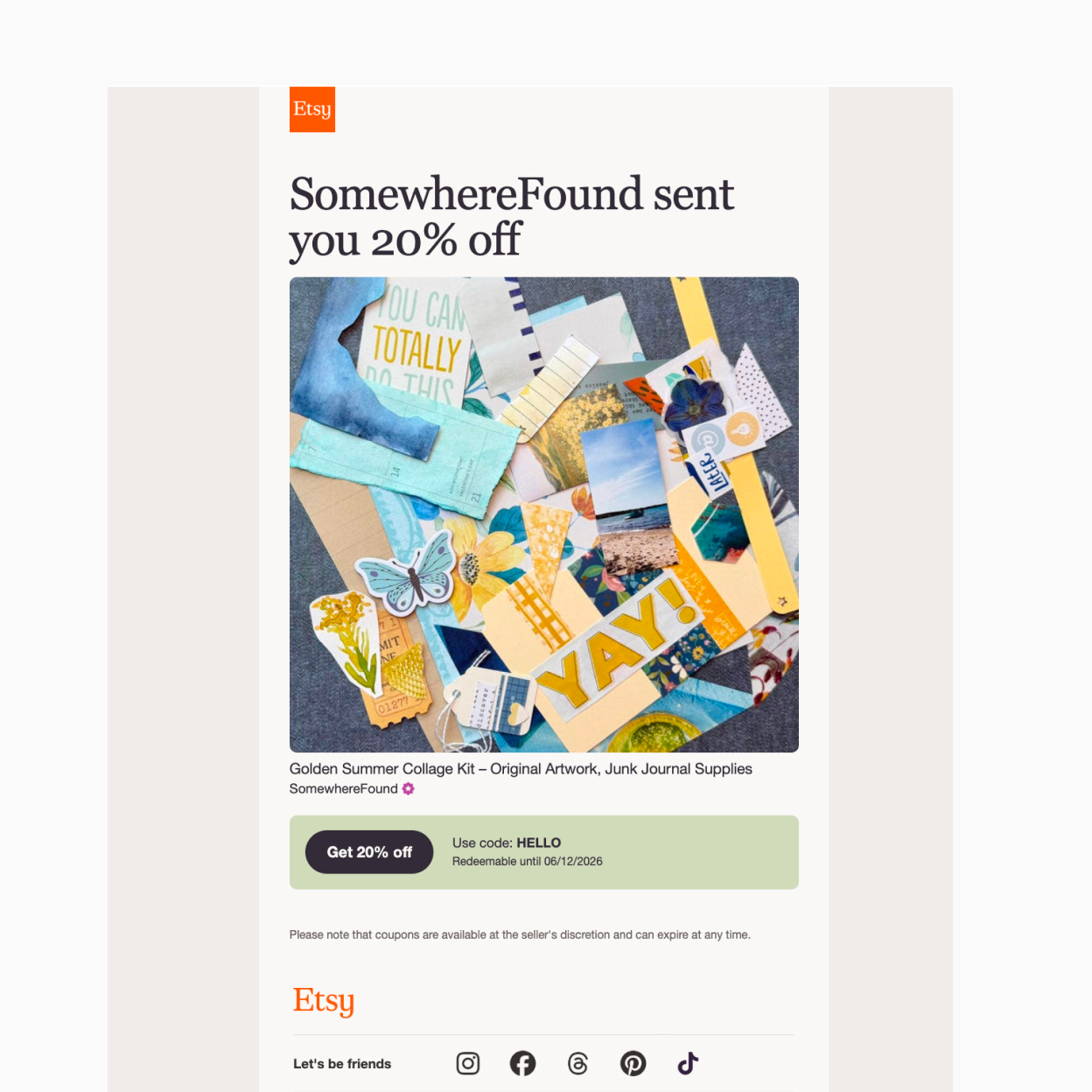
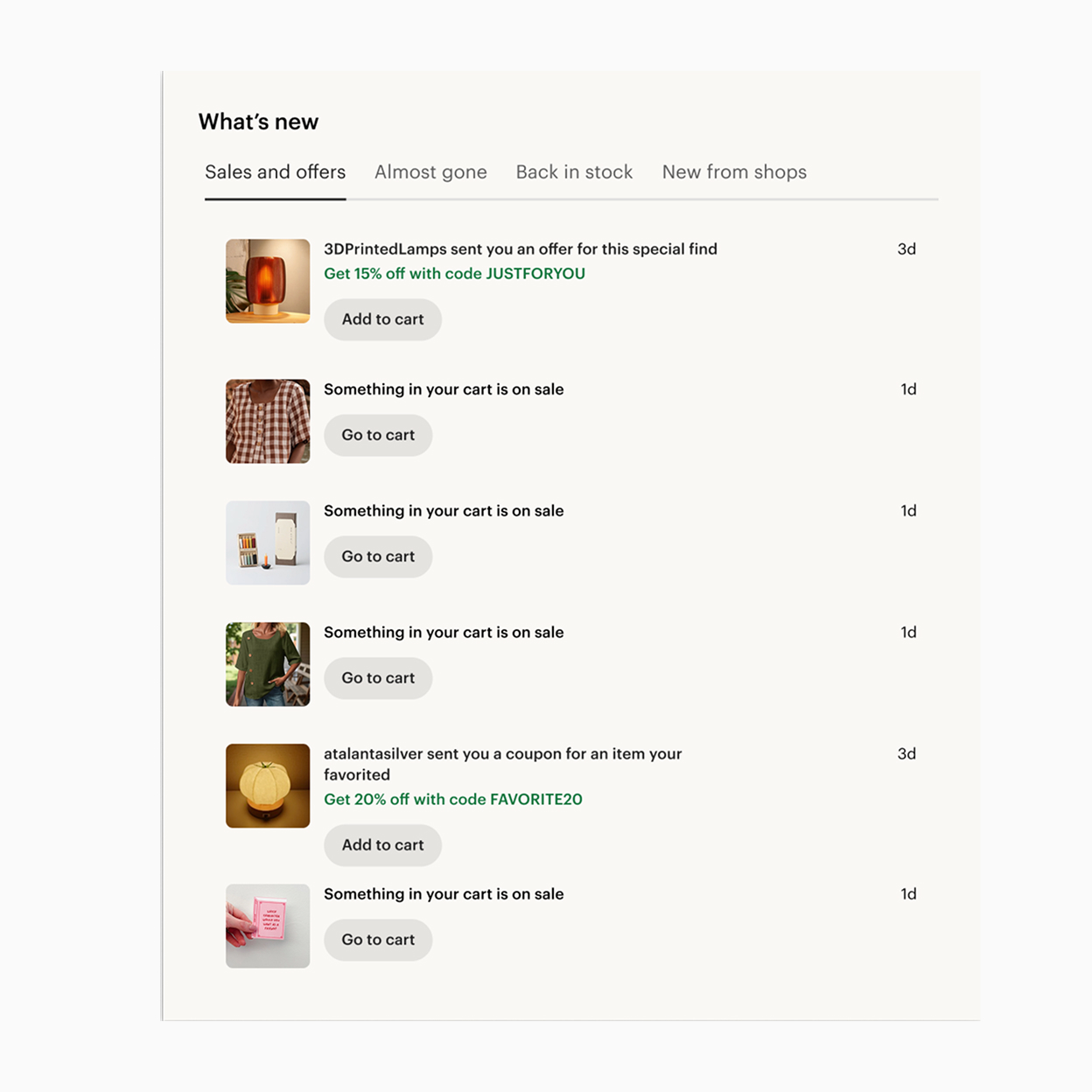
The seller setup was only one side of the experience. Once created, the offer could reach eligible buyers through email and selected onsite surfaces.
Supporting adoption
Shipping the experience was only part of the launch. I partnered with Product Marketing to plan how we would introduce the new offer to sellers and communicate its value, supporting adoption beyond the product experience itself.
Product performance
5.1%
Seller adoption rate
0.29%
Redemption rate
3.36%
Conversion rate
Since launch, sellers have adopted the new offer and buyers are redeeming and converting through the experience, giving the team real product behavior to inform future iterations.
What comes next
The MVP answered an important first question: sellers were willing to adopt a new way of reaching interested shoppers. The next challenge is improving how effectively the experience reaches buyers whose purchase intent is still forming.
Current work is exploring opportunities on both sides of the marketplace: improving buyer effectiveness while continuing to support seller adoption through both the product experience and how the offer is communicated.
Looking back
Good product judgment sometimes means changing your mind.
I initially questioned whether adding another promotion type was the right investment. The existing offers still had room to improve. Evidence about how little buyer traffic could trigger them changed my perspective: the opportunity wasn’t simply another promotion—it was reaching a part of the shopping journey the existing system couldn’t address.
Short-term trade-offs need a long-term strategy.
For the MVP, working within the existing experience was the right trade-off: it helped us learn faster without over-investing before validating the opportunity. But I also knew the broader promotions experience was reaching its limits. Making that trade-off responsibly meant keeping the longer-term direction in view—and continuing to advocate for a more modern, scalable foundation.
That longer-term direction is explored further in Etsy Promotions Vision 2026
Designing for change sometimes means saying less.
Because the targeting approach was expected to evolve, being overly specific could have made the experience more fragile. Working closely with Content Design helped us communicate enough for sellers to understand the value without exposing unnecessary implementation detail.