Overview
Oracle Redwood Design System
Designing reusable interaction patterns for complex enterprise products at scale.
10+
components and patterns
Enterprise-wide
designed across Oracle product contexts
End-to-end
interaction design ownership
- Role
- Interaction Designer
- Company
- Oracle
- Team
- Core Design System
- Scope
- Interaction Design
- Status
- Shipped
I owned the interaction design for components assigned to our team—from sourcing real product use cases and researching patterns to defining behavior, validating accessibility and usability, iterating with stakeholders, and delivering detailed interaction specifications to the specialized teams responsible for the next stages of the system.
Redwood was built by a highly specialized organization spanning Interaction Design, Visual Design, Motion, Accessibility, Product, and Engineering. Design Systems leadership owned the roadmap and component prioritization; my ownership began once a component entered our Interaction Design team’s scope.
The challenge
A component couldn’t be designed for one screen. It had to work across an ecosystem.
01
Different products exposed different needs
Oracle products spanned industries and workflows with very different requirements. A component that worked well in one context could break down in another, so the interaction model needed to account for variation across real product use cases.
02
Consistency without over-constraining
Redwood needed predictable interaction rules to create consistency across Oracle, without becoming so rigid that components could no longer adapt to legitimate enterprise workflows and edge cases.
03
Making interaction intent transferable
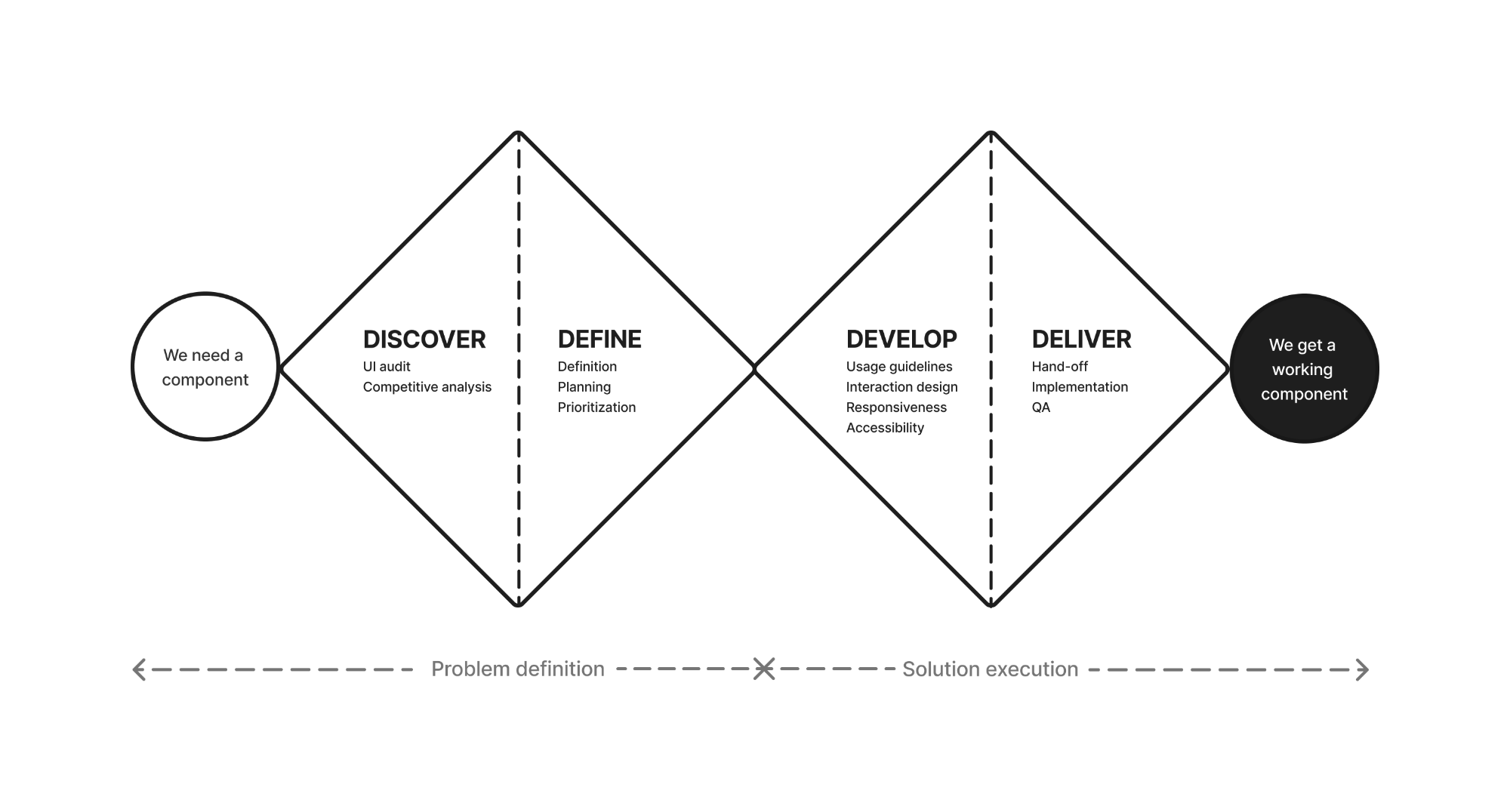
Redwood was built across specialized teams including Interaction Design, Visual Design, Motion Design, Accessibility, Product, and Engineering. My interaction work would continue through other specialized teams before reaching implementation.
The interaction intent therefore needed to remain clear as the component moved across disciplines. That required defining behavior, states, constraints, responsiveness, accessibility requirements, edge cases, and rationale with enough clarity that downstream teams could continue the work without losing the intent behind the interaction model.
Key decisions
01
Start with real product use cases
Design the component from the ecosystem inward.
A reusable component needed to represent the reality of Oracle’s products, not an idealized standalone pattern. I gathered examples from product teams, reviewed existing implementations, and worked with partners to understand where current patterns worked, where they broke, and what requirements the new component needed to support.
UX audits, interface inventories, sourced product examples, competitive analysis of established B2B design systems, and conversations with Product and Engineering were the material for understanding the system — not a sequence of process steps.
02
Treat the spec as an interaction contract
A component specification needed to answer more than “what does it look like?” It needed to define how the component behaves, when to use it, where its boundaries are, and how it adapts.
I defined the interaction model across usage, anatomy, behavior, states, limitations, responsiveness, accessibility, and edge cases. The goal was not simply to design the default state, but to make the rules explicit enough that the component could remain predictable across different Oracle products.
The documentation itself was the design work: a contract other teams could build from, not a picture of a single happy path.
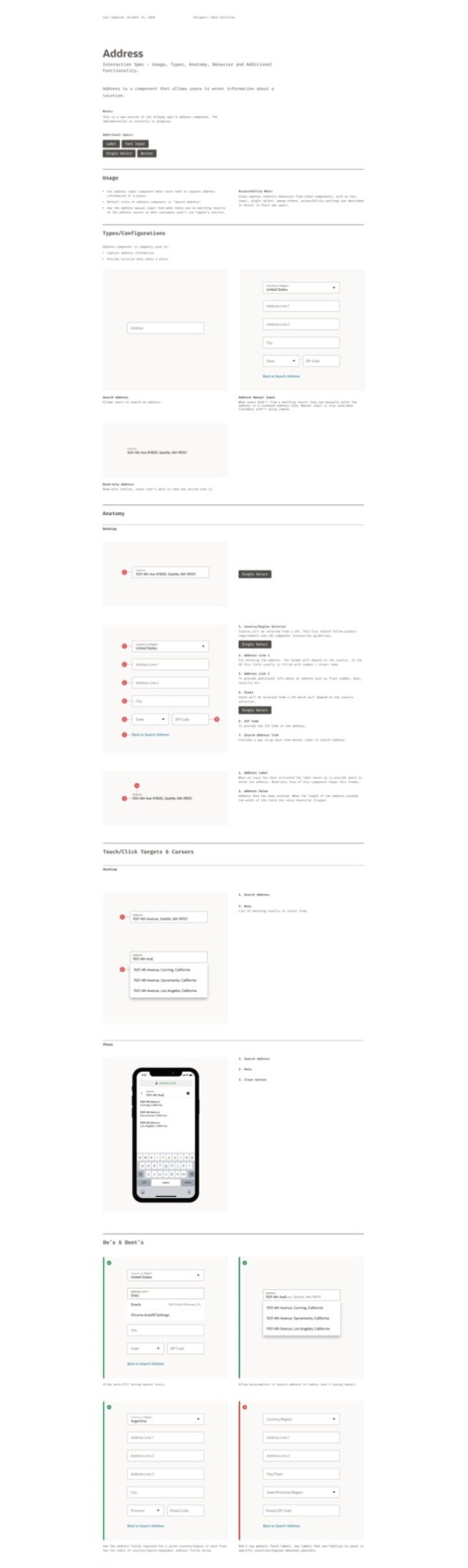
Address interaction specification. The work defined not only the component’s default state, but its usage, configurations, anatomy, interaction behavior, responsive considerations, and constraints. 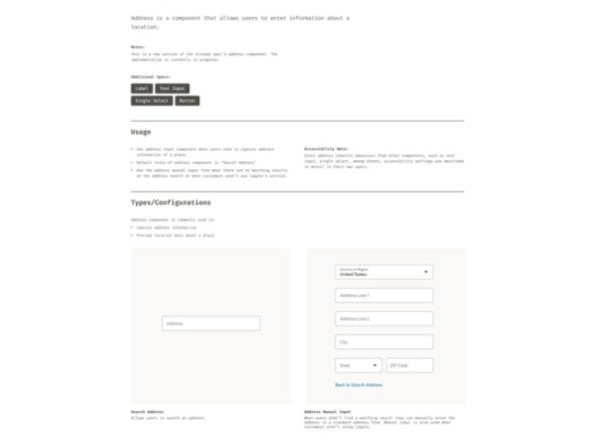
Defining usage and supported configurations. 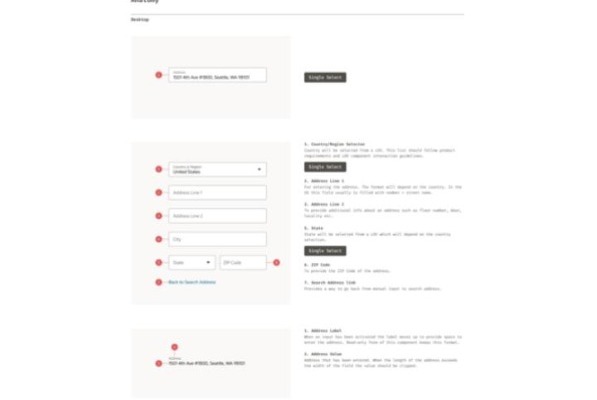
Making anatomy and interaction rules explicit. 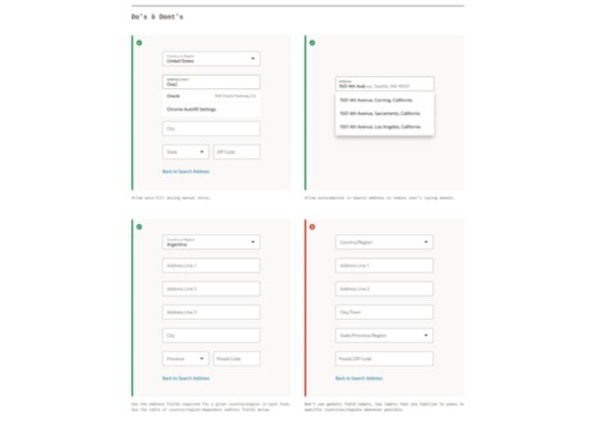
Accounting for interaction targets, responsive behavior, and usage constraints. 03
Resolve ambiguity before the component leaves Interaction Design
Reviews were part of the design process, not simply final approval.
Because each component moved through several specialized teams, the interaction model needed to be clear before it moved downstream. I used feasibility conversations with Engineering, stakeholder reviews, accessibility evaluations, and usability feedback to surface missing requirements and resolve interaction questions before handoff.
Engineering helped expose feasibility constraints. Accessibility reviews challenged interaction assumptions. Usability feedback helped validate behavior. Stakeholder conversations surfaced missing product contexts.
Iteration happened before the interaction specification moved downstream.
Outcome
The system
The interaction model had to be systematic enough to hold across products. These are the questions a Redwood specification needed to answer before the component moved on.
The complexity varied from component to component, but the principle remained the same: interaction rules needed to be explicit enough to work consistently across Oracle products and downstream disciplines.
01
Usage and boundaries
When should the component be used—and when should it not?
02
Anatomy and behavior
What elements make up the component, and how should they respond to interaction?
03
States and edge cases
How should the component behave outside the happy path?
04
Responsive behavior
How should the interaction adapt across layouts, devices, and product contexts?
05
Accessibility
What requirements need to be part of the interaction model from the beginning?
Structured input pattern
Interaction-dense component
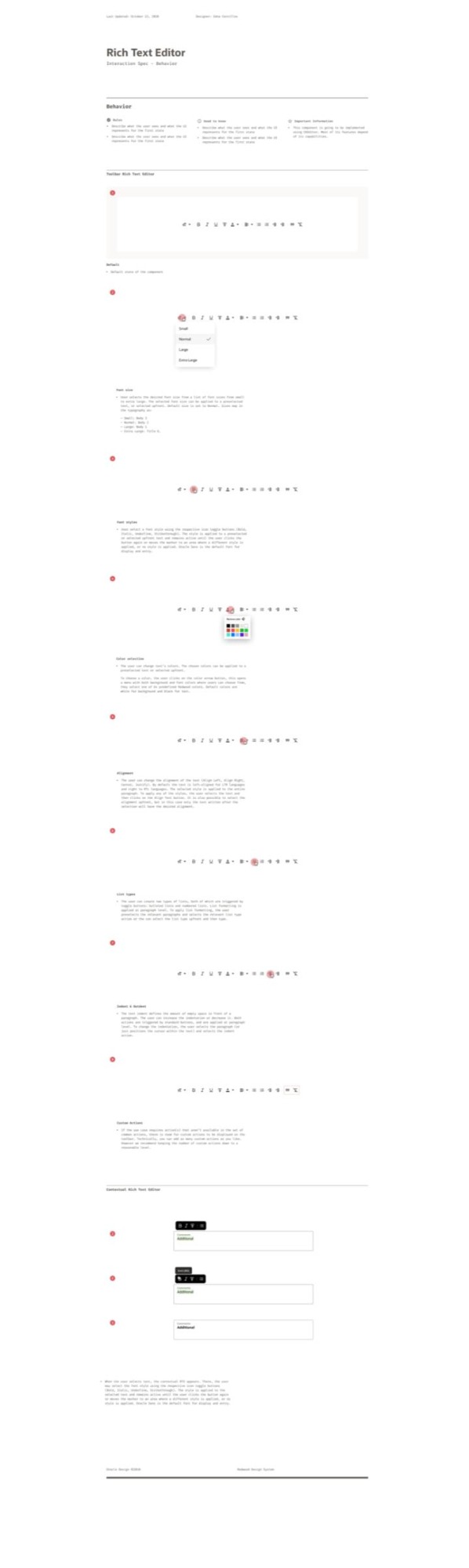
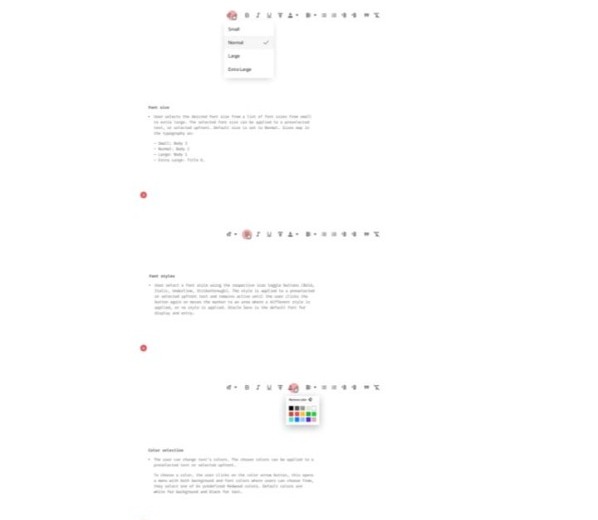
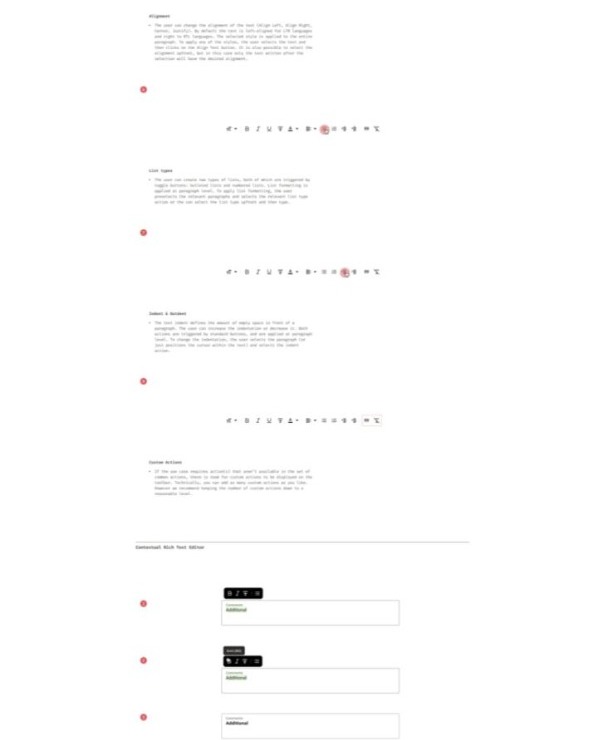
Contribution to Redwood
01
Reusable interaction models
Patterns designed to support multiple Oracle products, workflows, and contexts.
02
System-ready specifications
Detailed interaction rules and constraints that gave downstream design teams a shared foundation to build from.
03
Accessibility built into behavior
Accessibility was considered as part of the interaction definition rather than treated as a final check.
The interaction specifications contributed to Redwood’s shared component and template system, giving Oracle product teams a common foundation for bringing the new experience into complex enterprise workflows.
Redwood today
The system has continued to evolve since my time at Oracle. This walkthrough shows Redwood applied across Oracle’s enterprise product experience.
Looking back
Designing a system means designing for contexts you don’t control.
A component had to remain useful across products, workflows, and teams I would never directly design for. That pushed me to think in rules and boundaries rather than individual screens.
Edge cases are where a system proves itself.
The default state was usually the easy part. The real design work was defining how behavior held together across different states, constraints, accessibility requirements, and product contexts.
System decisions have to survive across teams.
Redwood was built by specialists across Interaction Design, Visual Design, Motion, Accessibility, Product, and Engineering. My work had to be explicit enough that the interaction intent could remain intact as the component moved through each discipline.