Overview
Etsy Promo-code Enhancements
Bringing Etsy’s promotion tools to a stronger competitive baseline.
- Role
- Design Lead
- Company
- Etsy
- Year
- 2026
- Scope
- Seller + buyer experience
- Status
- Shipped
My contribution
I led the design of the Promo-code Enhancements from early product definition through launch. I advocated for prioritizing greater flexibility in Promo codes based on seller needs and gaps identified through competitive analysis, explored the broader opportunity while the scope was still taking shape, and defined how the new capabilities would work across seller and buyer touchpoints.
I partnered with Product, Engineering, Analytics, Research, and Product Marketing throughout definition, experimentation, launch, and adoption.
The challenge
Closing a growing flexibility gap
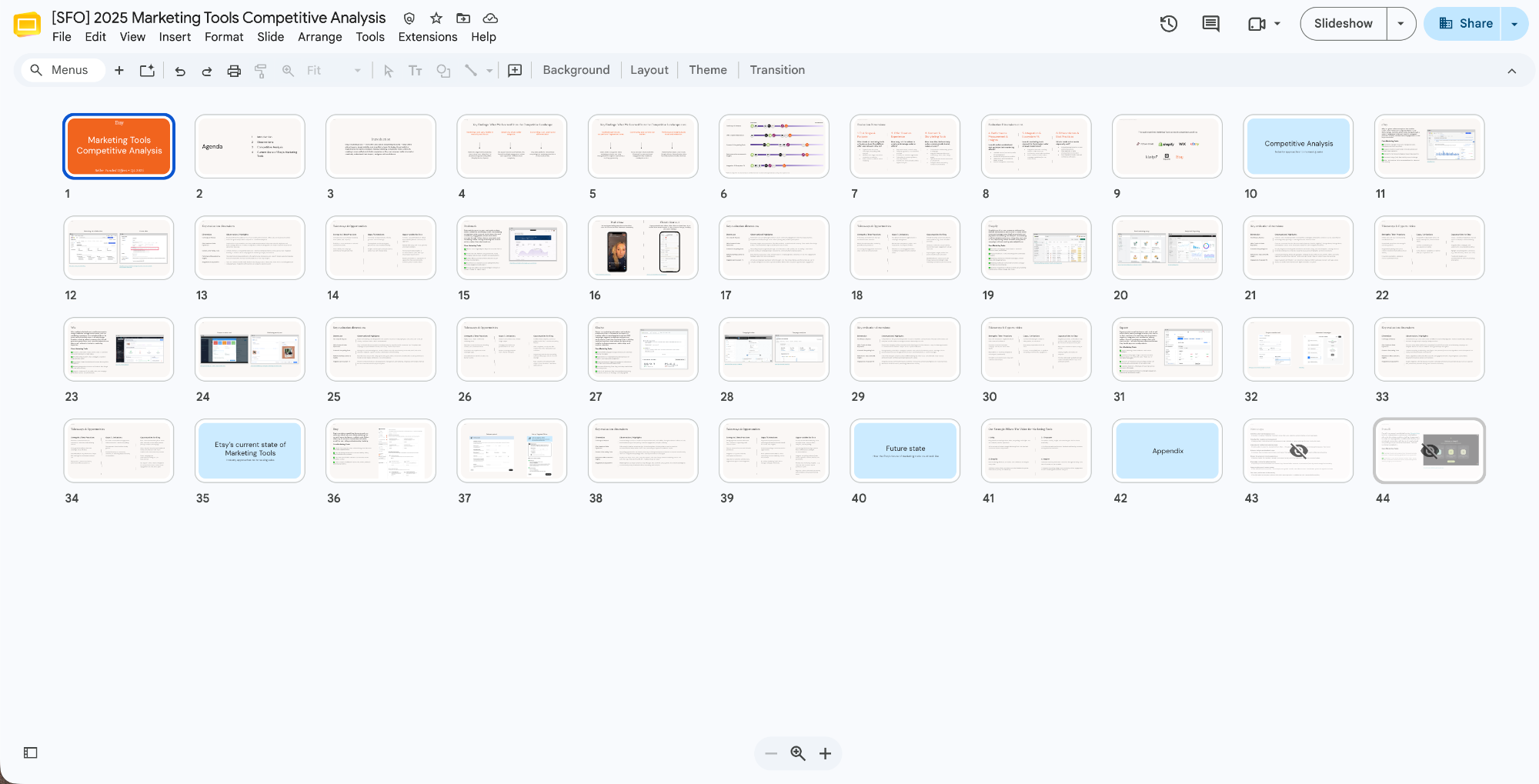
We had been exploring opportunities to make Etsy’s promotion tools more flexible and robust. Across different promotion types, we identified opportunities supported by qualitative seller feedback, competitive analysis, or a combination of both.
Promo codes emerged as a priority. The seller problem was particularly severe, and competitive analysis showed that capabilities already available elsewhere were missing from Etsy’s experience.
This was also our squad’s first feature launch following an organizational change. During H1 planning, I advocated for bringing Promo codes to a stronger competitive baseline while keeping the initiative focused enough to deliver value without turning it into a broader redesign.
How could we make Promo codes more competitive while staying focused on the seller problems that mattered most?
01
A known seller need
Qualitative feedback had surfaced situations where sellers wanted more control over how their promotions could be used, particularly when distributing them beyond Etsy.
The opportunity wasn’t simply to add more settings. It was to make Promo codes useful in a broader range of scenarios while preserving their simplicity.
02
A product below the competitive baseline
Competitive analysis showed that controls available in other promotional tools were missing from Etsy’s Promo-code experience.
During H1 planning, I advocated for closing that gap and bringing Promo codes to a stronger baseline rather than continuing to leave a known seller problem unresolved.
03
A tactical opportunity after a reorganization
This became our squad’s first feature launch following an organizational change.
That context made scope particularly important. We had an opportunity to solve a well-understood problem, but it didn’t need to become a broader redesign of the Promo-code experience.
Key decisions
01
Prioritize the flexibility sellers needed most
Start with the clearest problem, not the biggest possible scope.
The opportunity extended beyond Promo codes. We had considered ways to make multiple types of promotions more robust, including Targeted Offers, and some of those opportunities were incorporated into longer-term planning.
Rather than expanding multiple promotion types at once, we prioritized Promo codes, where the seller problem was more severe and the competitive gap was clearer.
I advocated for addressing that gap during H1 planning, using the evidence we had gathered to help bring the product closer to the baseline sellers could find elsewhere.
02
Expand what Promo codes could do without changing how sellers understood them
Introduce new flexibility within a familiar model.
While the scope was still taking shape, I explored how greater flexibility could influence the broader Promo-code experience, including how sellers viewed and managed their active codes.
These explorations helped me understand how the product could evolve as we introduced more robust promotional capabilities.
For this release, I integrated the new controls into the established setup model rather than introducing a different way of creating Promo codes. Sellers gained more control over how their codes could be redeemed while continuing to use a creation experience they already understood.
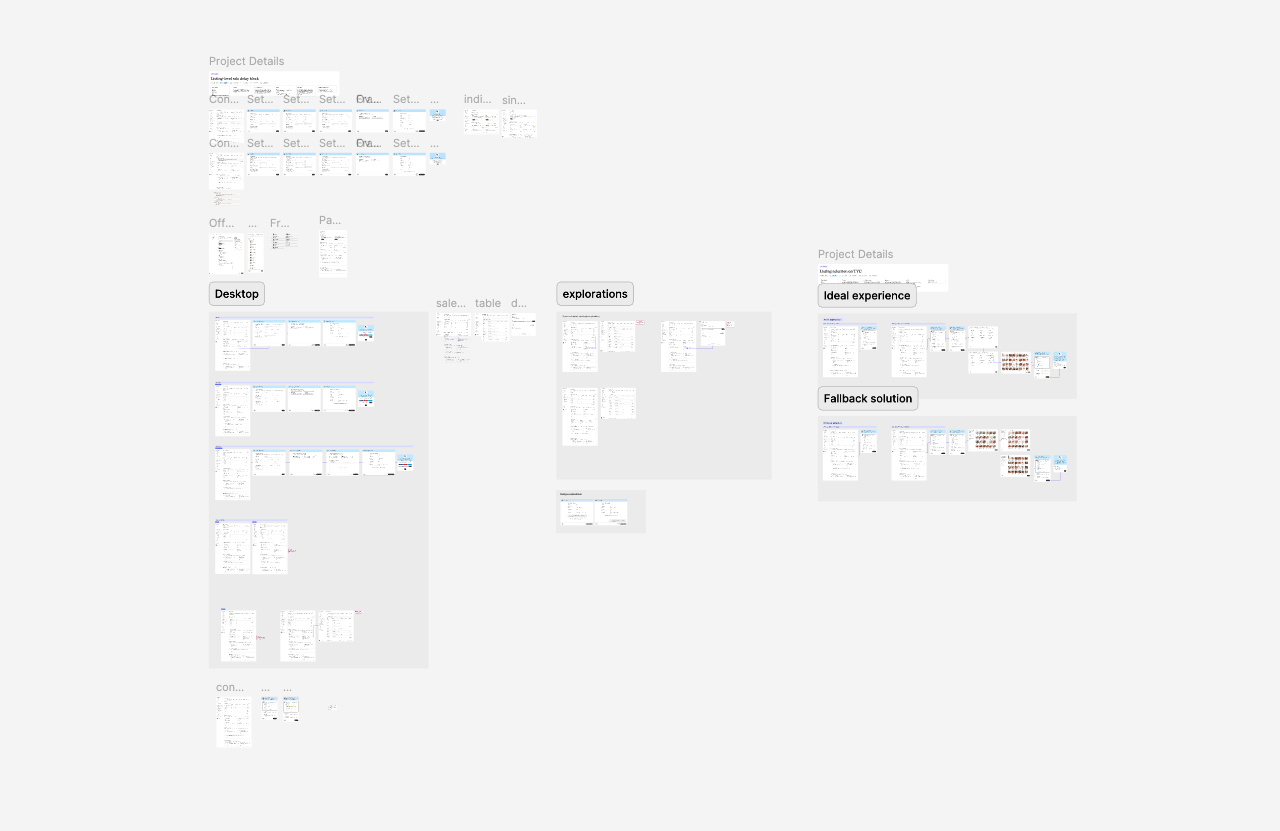
Exploring the broader opportunity before narrowing the scope. Early explorations considered structural improvements to how sellers could understand and manage their active Promo codes. As the product scope became clearer, I separated those longer-term opportunities from what we needed to solve now. Two new ways to control redemption
We focused the experience on two additional ways for sellers to control how their Promo codes could be redeemed:
Total redemption limit
Sellers can define the maximum number of times a Promo code can be redeemed.
Single use per buyer
Sellers can limit a Promo code to one redemption per buyer.
Both capabilities were incorporated into the existing setup rather than introducing a new creation model.
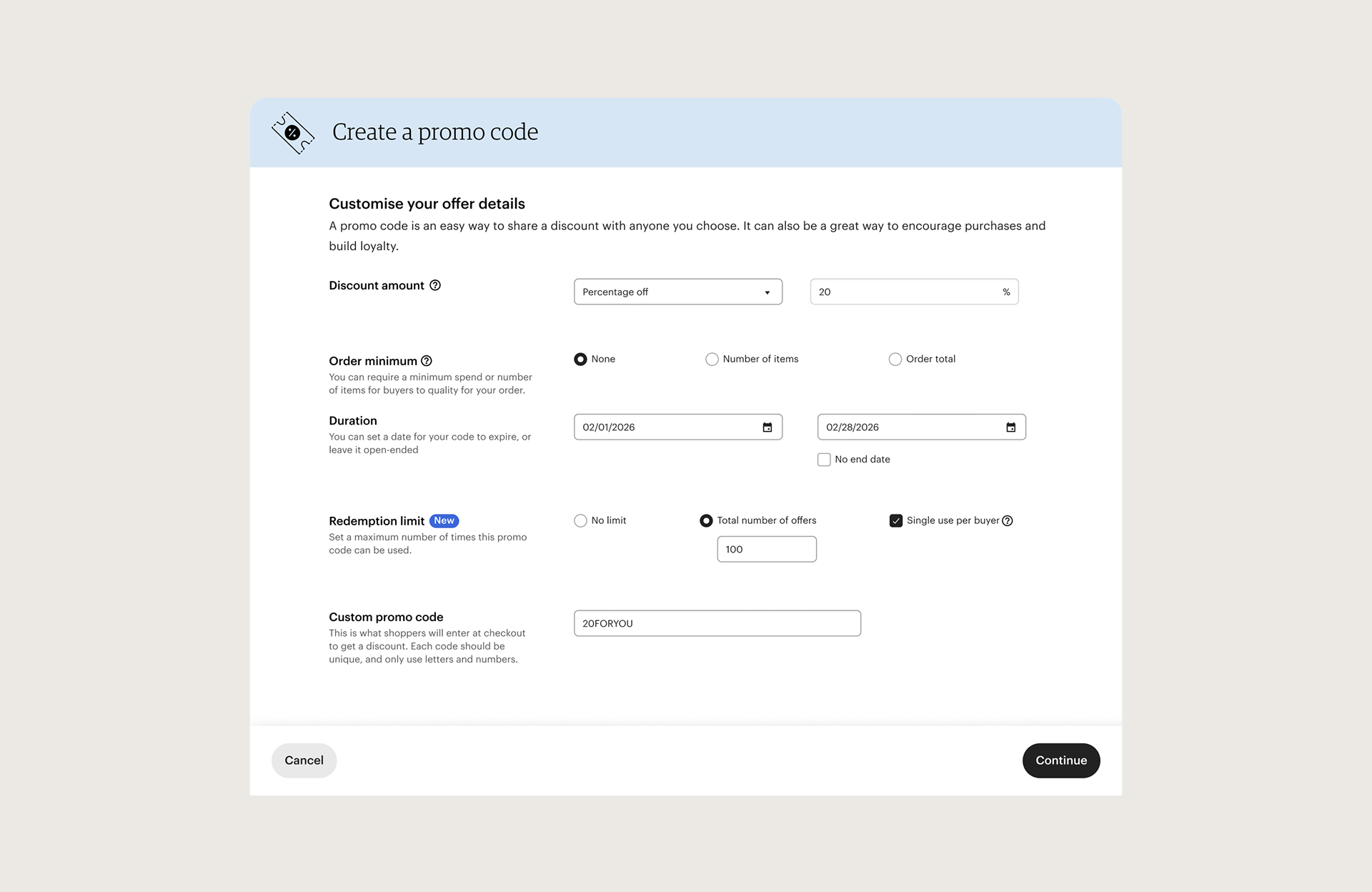
Adding flexibility within the existing setup. The new controls extend what sellers can do with Promo codes while preserving the creation experience they already know. 03
Define how each capability works across the experience
Design the behavior, not just the entry point.
Each capability needed clear and consistent behavior across the Promo-code experience—from how sellers configured and managed it to what buyers encountered when a code could no longer be redeemed.
I developed a detailed design specification covering the relevant use cases and flows across desktop and mobile web, including the initial buyer-facing touchpoints affected by the new controls.
Because Total redemption limit was initially launching as an experiment, I also defined remediation communications for the possibility that the feature wasn’t ramped. This allowed us to account for both the intended experience and the states we would need to support if the experiment led us in a different direction.
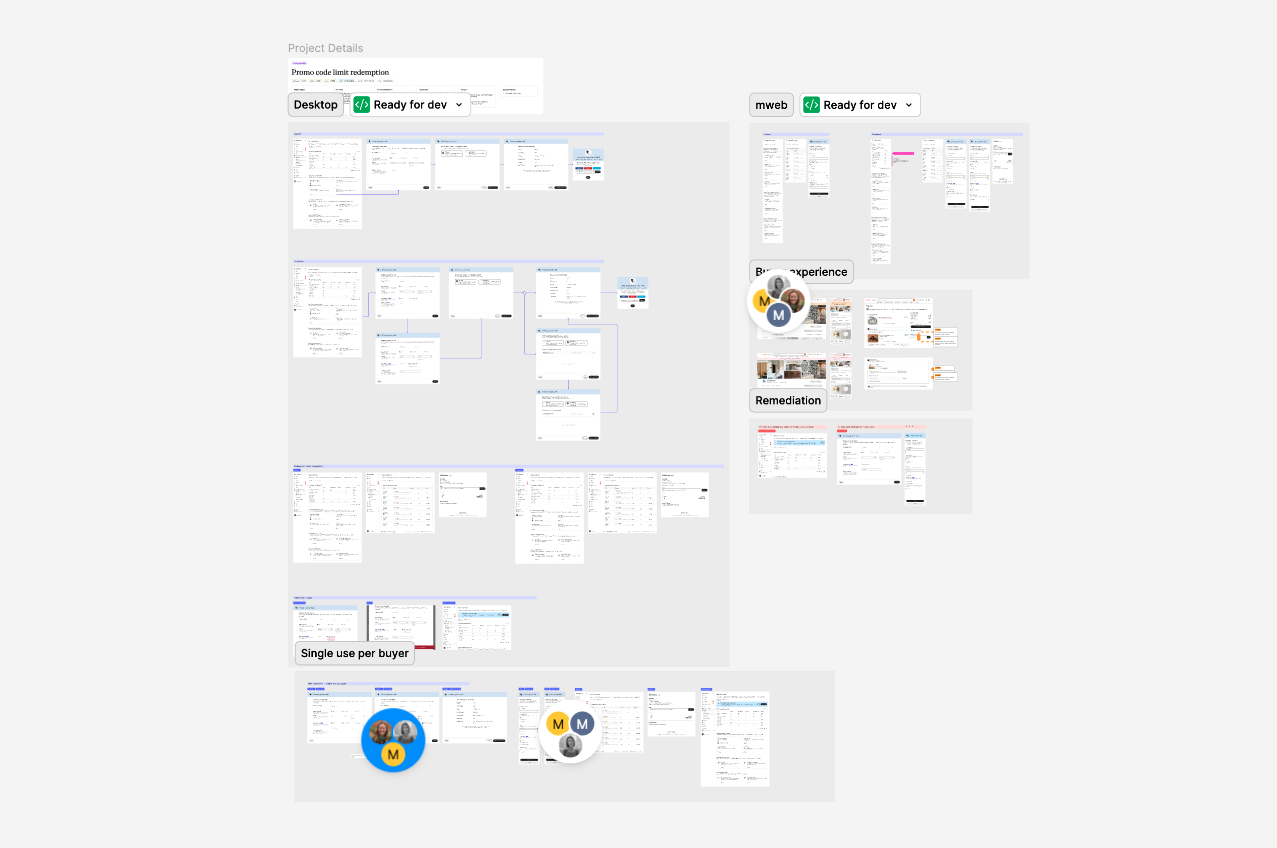
Defining the capabilities end to end. The specification connected seller use cases, responsive behavior, buyer touchpoints, and alternate launch states so the new controls could behave consistently across the Promo-code experience.
Outcome
Expanding Promo-code flexibility incrementally
The capabilities were introduced in phases.
Total redemption limit launched first through an experiment, giving the team an opportunity to measure behavior before determining how to proceed.
We later launched Single use per buyer to all sellers.
Together, the enhancements expanded what sellers could do with Promo codes while preserving the existing setup experience.
Sellers are using both controls
Since launching the enhancements in Q2 2026, sellers have incorporated both capabilities into newly created Promo codes.
5.7%
of new promo codes created with a total redemption limit
13.7%
of new promo codes created with single use per buyer
Adoption among new promo codes created since launch in Q2 2026, through September 2026.
Supporting adoption
Shipping the capabilities was only part of the launch. I partnered with Product Marketing as they developed a go-to-market plan to introduce the new controls and help sellers understand when they could be useful.
Looking back
Competitive analysis is most useful when it helps identify where to invest.
Competitive analysis helped reveal where Etsy’s promotion capabilities were falling behind the market. Combined with the seller problems we already understood, it gave us stronger evidence for prioritizing where additional flexibility could make the product more useful.
Focused scope still requires end-to-end definition.
Keeping the existing setup allowed us to stay focused, but the new capabilities still needed to work coherently across seller and buyer experiences, desktop and mobile web, different use cases, and alternate launch outcomes.